
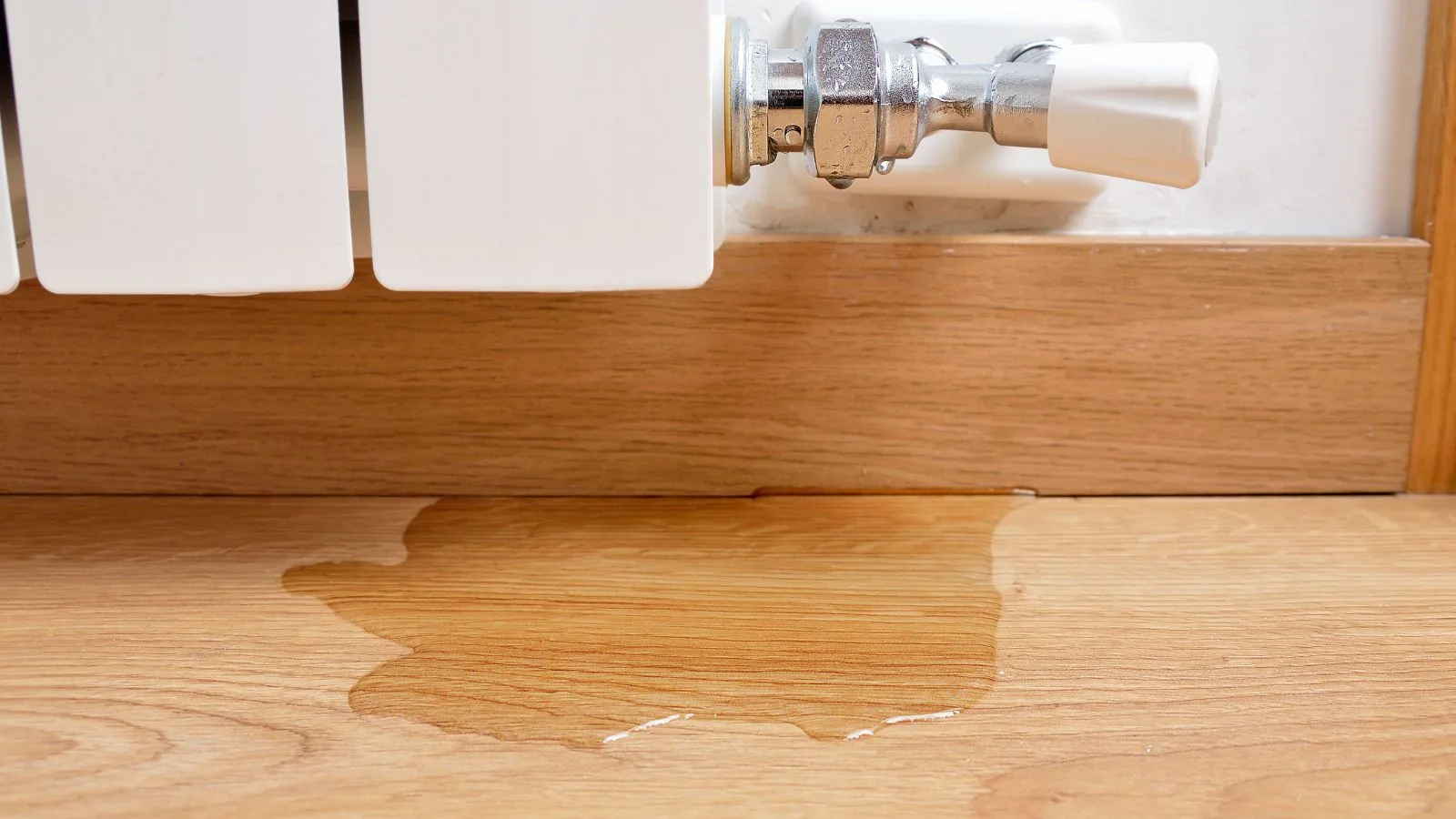
An appliance leak in Dearborn Heights, MI is an emergency when water is spreading, and it is a quiet emergency when the leak has been hidden for days. Dispatch is available 24/7. Close the shutoff valve to the appliance, unplug it only if the outlet is dry, and pull it away from the wall if you can do so safely.
This page is about the failure of the appliance itself: a split washer hose, a dishwasher door seal, a refrigerator ice maker line, a toilet supply valve. The kitchen cabinets, under-sink area and countertop damage are on the kitchen water damage page. This one stays with the appliance and the floor under it.
Where appliance leaks come from
| Appliance | Common failure | What gets wet first |
|---|---|---|
| Washing machine | Supply hose or drain hose at the valve | Laundry floor and the wall behind |
| Dishwasher | Door gasket, inlet valve or drain hose | Kitchen floor and cabinet base |
| Refrigerator | Ice maker or water filter line | Floor beneath and under cabinets |
| Toilet | Supply line, wax seal or tank | Bathroom floor and ceiling below |
| Dehumidifier or humidifier | Overfull tank or hose | Carpet and baseboards |
A washer valve that breaks while the family is out can run for hours. In that case water often reaches the next room, crawls into the baseboard, and drips through the ceiling below if the laundry is upstairs. Tell dispatch how long it may have run so the crew plans the right amount of drying.
Found water around an appliance? Call. Dispatch is open any time, day or night.
Call (833) 521-1033Dealing with water you did not catch right away
Slow appliance leaks are the most underestimated because the floor beneath is hidden. Vinyl planks and laminate can trap water underneath and swell at the seams. Carpet pad holds water for days. A crew with moisture meters can read the subfloor under flooring without taking it all up, so removal is limited to what is wet.
How the crew responds
- Extraction of any standing water with wands and wet vacuums
- Moisture readings under flooring and behind baseboards
- Removal of wet pad, swollen trim and drywall that will not dry
- Air movers and dehumidifiers with logged daily readings
- A written scope the insurer can review
A floor that cups after a washer leak is covered in hardwood floor water damage repair, and wet carpet is covered in carpet water damage restoration. A heater that fails is a different source, described in water heater leak cleanup.
What the crew checks around an appliance
Appliance leaks often start at a hose, a valve or a drain connection, and the water travels along the floor to the nearest low point. The crew checks the cabinet base, the wall behind the unit, the flooring edge and the room below if there is one. Readings are taken in each place so that damp spots out of sight are found before equipment is set.
The failed part is kept for your records, and the appliance is moved only as far as needed to reach the wet area.
Safety checklist before the crew arrives
- Unplug the appliance only if the outlet and floor are dry
- Close the appliance supply valve
- Do not use a household vacuum on standing water
- Keep children and pets away from the wet floor
What affects the scope and price
Appliance leak scope guide
Factors only, not prices. Scope and price are explained before work starts.
A burst hose or failed valve is commonly treated as sudden damage, while gradual leaks from worn seals may be treated differently, and your policy decides. Photograph the appliance, the valve and the wet area. Want your real number? Call (833) 521-1033.
Appliance leak questions
Do you handle appliance leak emergencies at night or on weekends in Dearborn Heights?
Yes. Dispatch is available 24/7 by phone, and a washer valve that fails overnight is handled the same way as a daytime call.
Should I replace the appliance before drying?
You can pull it out of the way, but you do not need to replace it first. The crew dries the floor and wall around it.
Do you repair the appliance or hose?
No. An appliance technician or plumber handles the repair. We handle the water damage that results.
How long can a slow leak go before it is a problem?
There is no safe number. Moisture can wet a subfloor within a day, and mold can start on wet materials within 24 to 48 hours, according to the EPA.