
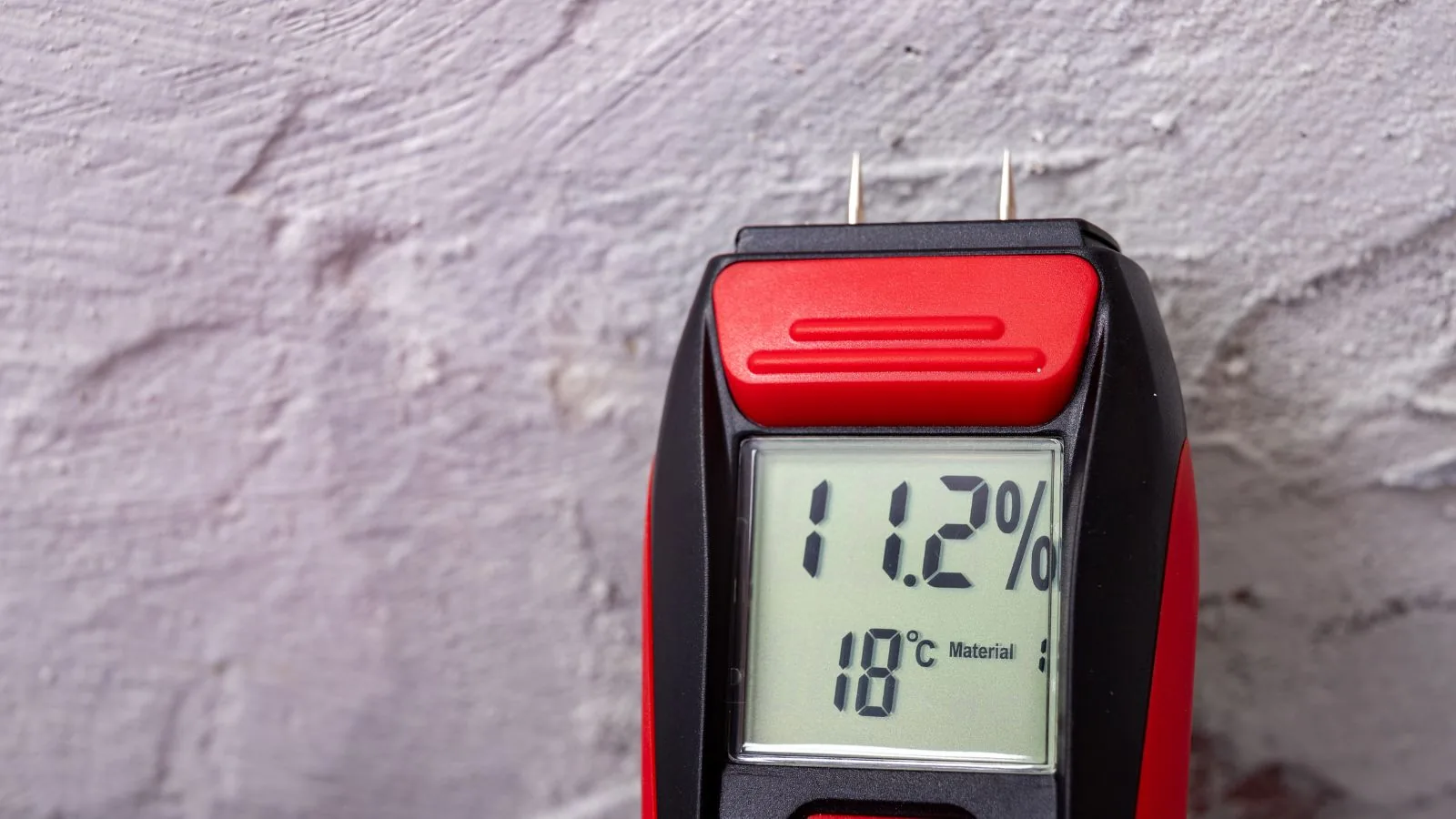
Structural drying in Dearborn Heights, MI is the stage that follows extraction. It uses air movers, LGR dehumidifiers and moisture meters to bring wet framing, drywall and floors back to a normal moisture content. This is also called water mitigation. The phone is answered 24/7, and drying is best started within a day of the loss.
My wall feels damp and the carpet smells, what do I need?
A wall that feels cool and damp, or a room that smells musty after a leak, usually has water inside it that fans alone will not reach. What you need is measured drying, which the trade calls structural drying and dehumidification. It starts with readings, not with equipment guesses, so we know what is wet before we set anything up.
What the equipment does
| Equipment | Job | Why it matters |
|---|---|---|
| Moisture meter | Reads moisture inside drywall and wood | Finds wet areas you cannot see |
| Thermal camera | Shows temperature differences from wet materials | Helps map the affected area |
| Air movers | Push air across wet surfaces | Speed evaporation |
| LGR dehumidifier | Pulls evaporated water out of the air | Keeps humidity from rising |
| Injectidry panels or drilled holes | Move air into wall cavities | Dry framing without full demolition |
Air movers alone just move wet air. Dehumidifiers remove the moisture the air movers release, which is why they run together. Equipment is placed by reading the room, not by a standard count, and it is moved as readings change.
Wet structure after a leak? Call and describe it. Dispatch is available 24/7.
Call (833) 521-1033How long does drying take?
Many jobs take several days, though the real answer depends on the materials and the amount of water. Dense materials like plaster, thick wood and concrete dry slowly. The crew visits, takes readings, adjusts equipment and removes it only when readings match a dry reference. We do not rent equipment out, since placement and monitoring are part of the work.
- Day one: extraction, moisture mapping and equipment setup
- Days two to four: daily readings and equipment adjustments
- Final visit: confirm dry readings, remove equipment
- Rebuild begins only after readings show dry
Water mitigation, defined
Water mitigation means the work done to stop a water loss from getting worse. It includes stopping the source if possible, extracting standing water, removing materials that cannot be dried, and drying the rest. Rebuild comes after mitigation, and it is billed as a separate scope.
If standing water is still present, read emergency water extraction first. For drying a particular material, see hardwood floors, carpet or wall and drywall. The same approach is used on commercial jobs under commercial water damage.
Equipment and readings in practice
Air movers push dry air across wet surfaces, and dehumidifiers pull the moisture out of the room. The crew places units based on the size of the wet area and the materials, then reads moisture each visit and moves equipment to where it is needed. When readings reach the dry reference, the equipment comes out, and the log shows the full trend.
What affects the scope and price
Drying scope guide
Factors only, not prices. Scope and price are explained before work starts.
Drying is commonly part of a covered claim when the water event was sudden. Moisture logs and photos help your insurer review it. Ask your insurer what your policy covers. Want your real number? Call (833) 521-1033.
Structural drying questions
Why is my wall still damp after a week of fans?
Fans move air but do not remove moisture from the room without dehumidification. Readings tell whether the wall cavity is still wet.
Can you dry the walls without tearing them out?
Often yes, using drilled holes or panels to move air into the cavity. Wet insulation or drywall that will not dry is removed.
Do you rent air movers or dehumidifiers?
No. Equipment is used on our jobs and not rented, so placement and readings are managed by the crew.
Do you offer drying at night?
Dispatch is available 24/7 by phone to arrange a visit, and equipment runs around the clock once set.