
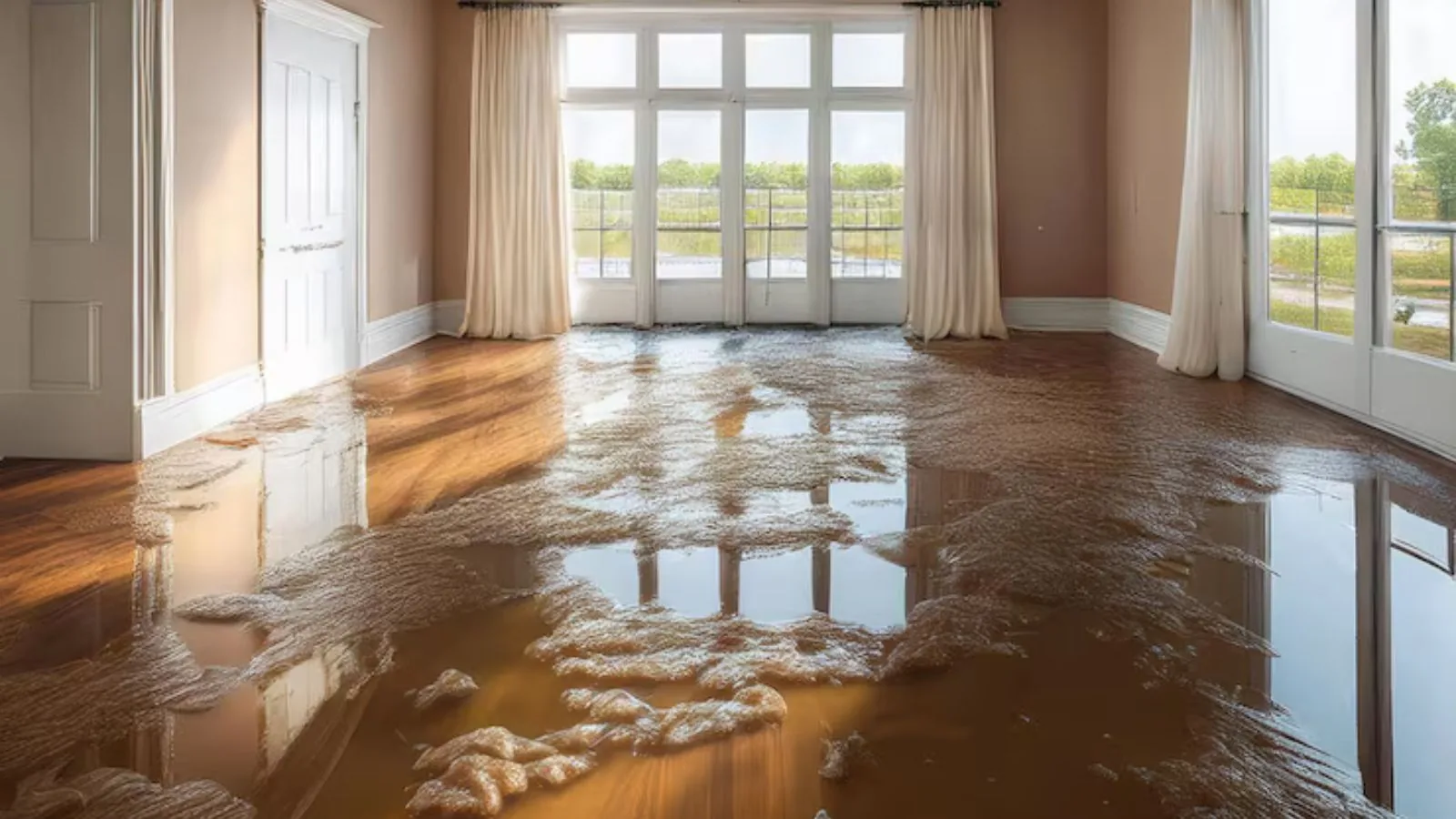
People in Dearborn Heights ask this question while standing in a wet kitchen or basement, and the answer is rarely a plain yes or no. Coverage depends on what caused the water, how fast it happened and what your policy says. This guide explains the three situations insurers separate and what to do first.
We are a restoration company, not your insurer, and we cannot tell you what your policy pays. What we can do is explain how the common categories work, based on guidance from the Michigan Department of Insurance and Financial Services, and help you document the loss.
Three kinds of water, three different answers
| Cause | Typical treatment | What to check |
|---|---|---|
| Sudden leak from a pipe, water heater or appliance | Often covered under a standard homeowners policy | Policy wording on sudden and accidental loss |
| Flood from rising outside water | Not covered by standard homeowners policies, according to DIFS | Flood insurance through the NFIP or a private insurer |
| Sewer or drain backup | Usually needs a water or sewer backup endorsement | Whether the endorsement is on your policy and its limit |
| Slow leak over months | Often excluded | Maintenance and long-term seepage language |
Michigan's insurance department says flood damage is not covered under a standard homeowners policy and points homeowners to the National Flood Insurance Program or private flood coverage. It also says some policies offer endorsements for water and sewer backup. Read your own declarations page to see what you bought.
Why the cause matters so much
A supply line that bursts inside a wall is sudden and accidental. Creek water crossing a street and entering a basement is flood. A floor drain that pushes sewage up is a backup. Each of these has its own rules, and one event can involve more than one. A storm may bring rain through the roof and also push water up a drain.
That is why we suggest telling your insurer you have water damage and letting the claim process sort out the category. DIFS recommends describing the loss as water damage, not only flood, when you report it.
What to do in the first hour
- Stop the sourceClose the fixture valve or main shutoff if you can reach it safely.
- Photograph everythingCapture the source, the water line and the damaged items before anything is moved.
- Keep damaged itemsDIFS says to keep damaged items until the insurer says otherwise.
- Call your insurerReport the loss and ask what your policy covers.
- Call a restoration companyExtraction and drying start the clock on preventing further damage.
Water in the house and unsure where to start? Call and tell us what you see. Dispatch is open 24/7.
Call (833) 521-1033Where restoration fits in a claim
Drying and cleanup are part of limiting the loss, and most policies expect you to take reasonable steps to prevent more damage. A written scope with photos and moisture readings gives your insurer something concrete to review. Our structural drying page explains the readings, and burst pipe water damage shows what a sudden leak looks like on paper.
Reading your own policy
Pull out the declarations page and the full policy. Look for three things: the section on sudden and accidental water discharge, any exclusion for flood, surface water or groundwater, and any endorsement for water or sewer backup. The endorsement often has its own limit, which can be lower than the main dwelling coverage, so check the number and not only the name.
Also read the deductible. A small leak that costs less than the deductible may not be worth filing, which is a topic we cover in the claim-or-not guide on this blog. Your agent can explain terms you do not follow. Ask in writing if you want an answer you can keep.
Gradual damage versus sudden damage
Many policies pay for sudden events and exclude damage that builds slowly, such as a pipe that has dripped inside a wall for months or seepage through a foundation. An adjuster may ask when the damage began and look for older staining. A moisture map and clear photos help show what is new and what is not.
That difference is one reason we take readings early. A fresh, wet wall reads differently from one with long-term staining, and notes on the first visit help describe what you found.
A local note on flood and coverage
Dearborn Heights has a documented flood history. The Wayne County drain office reports that on May 21, 2004 a storm of more than four inches of rain made the North Branch Ecorse Creek rise nearly six feet in about three hours and flooded more than 1,500 homes in the city.
In 2021, FEMA declared disaster DR-4607 for severe storms and flooding on June 25 and 26 in Wayne and Washtenaw counties, and Dearborn Heights and Garden City were among the places listed. Because a standard homeowners policy does not cover flood, owners in low areas are the ones who most need to read their policy before the next storm.
Insurance questions can wait, drying cannot
Even if you are not sure about coverage, standing water keeps damaging materials. Neighbors in nearby towns call us too. Homeowners in Garden City and Inkster face the same policy questions. Our job is to dry the structure and document the work, and your insurer decides what is paid.
If you want a sense of what drives price, see our kitchen page and basement page cost factor sections. Want your real number? Call (833) 521-1033.
Questions about coverage
Does homeowners insurance cover a burst pipe in Dearborn Heights?
Often yes for sudden damage, depending on your policy. Report it promptly and ask your insurer what applies.
Is a flooded basement covered?
Flood from outside water is not covered by a standard homeowners policy, according to Michigan DIFS. Backup from a drain may be covered only with an endorsement.
Will my premium go up if I file?
That is a question for your insurer or agent. We cannot predict it.
Do you work directly with my insurer?
We provide photos, readings and a written scope. Your insurer decides coverage and payment.
Should I wait for the adjuster before drying?
Document first, then dry. Waiting lets water spread, and most policies expect you to limit further damage.